Salik Tolls in Dubai: What Visitors Need to Know
Salik is Dubai's automatic road toll: a windscreen tag is read at ten gantries on Sheikh Zayed Road, Al Khail Road and the Creek crossings, and the charge is AED 6 per crossing at peak, AED 4 off-peak and free from 1am to 6am. You only handle it yourself in a hired car. Taxis pay the same toll, and with a chauffeur the price is fixed at booking.
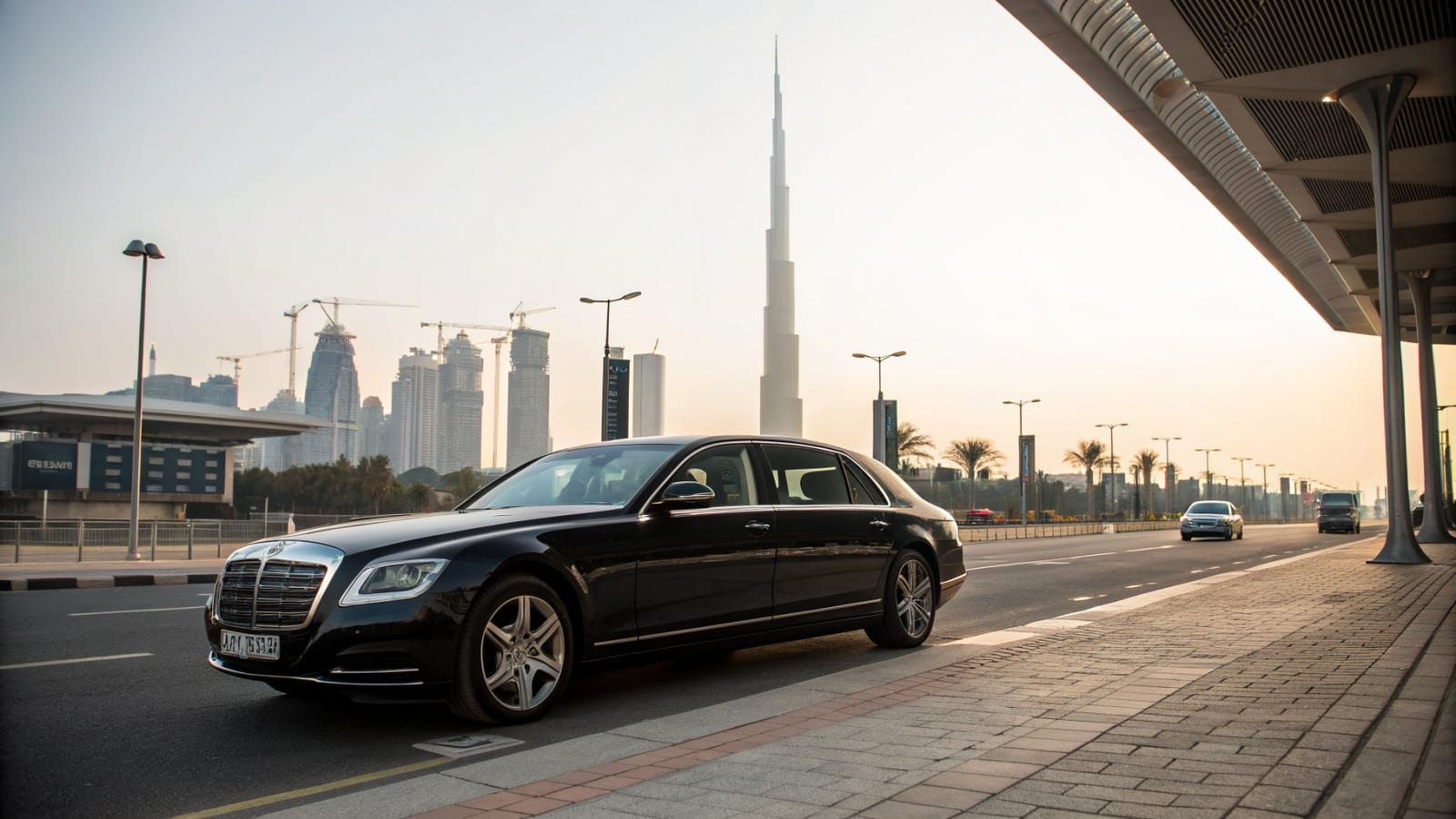
Salik is Dubai's electronic road toll, and as a visitor you never stop at a booth or hand over cash: a tag on the windscreen is read as the car passes under a gantry and the charge comes off a prepaid account. The rate is AED 6 or AED 4 per crossing depending on the time of day, and there are ten gates across the city. Whether it lands on you depends on how you get around: a hired car means you deal with it, a chauffeur means you do not.
What is Salik and how does it work?
Salik is a fully automatic toll with no barriers, no lanes to pick and no slowing down. The Dubai government portal explains that every vehicle carries a rechargeable Salik tag on the windscreen, and the toll is deducted from that tag each time the car passes through a gate.
The system is run by Salik on behalf of the Roads and Transport Authority (RTA). Its own operational review confirms that gates use plate recognition and RFID tags to charge the linked account automatically, with no ticket and no stop.
Salik at a glance
| Fact | Detail | Source |
|---|---|---|
| Peak rate | AED 6 per crossing, Monday to Saturday, 6am to 10am and 4pm to 8pm | Dubai government portal |
| Off-peak rate | AED 4 per crossing | Dubai government portal |
| Free window | 1am to 6am every day | Dubai government portal |
| Sundays | Flat AED 4 outside the free window | Dubai government portal |
| Number of gates | Ten, since 24 November 2024 | Salik operational review |
| Roads covered | Sheikh Zayed Road, Al Khail Road, the Creek crossings and the airport tunnel | Salik, How Salik Works |
| No tag or no balance | Fines apply; an empty account must be topped up within 5 days | Dubai government portal |
How much does Salik cost per crossing?
AED 6 in peak hours and AED 4 the rest of the day, with nothing charged between 1am and 6am. Dubai charges by time of day rather than a flat rate, and the government portal sets out the current bands: peak is Monday to Saturday, 6am to 10am and 4pm to 8pm, at AED 6, everything else at AED 4.
Sundays are simpler. The same page states that a flat AED 4 applies all day on Sundays, excluding the free early morning hours.
Two things visitors miss. The charge is per gate, not per drive, so a run down Sheikh Zayed Road at 5pm can pass three or four gantries and cost AED 6 at each one. And the peak windows sit exactly where airport runs and hotel check-ins tend to fall, so the higher rate is the one you will meet most often.
Want the car waiting when you land?
Name board in arrivals, flight tracking and 60 minutes of free waiting time, all at a price fixed when you book.
Where are the Salik gates in Dubai?
There are ten gates, and nearly all of them sit on the two roads visitors use most. Salik's own map lists them as Al Mamzar North, Al Mamzar South, Airport Tunnel, Al Maktoum, Al Garhoud, Business Bay Crossing, Al Safa, Al Safa South, Al Barsha and Jebel Ali, strung along Sheikh Zayed Road and Al Khail Road.
The two newest gates opened on 24 November 2024. The RTA's announcement places Al Safa South on Sheikh Zayed Road between Al Meydan and Umm Al Sheif Streets, and Salik's review puts Business Bay Crossing on Al Khail Road.
There is one helpful exception. Pass both the Al Safa and Al Safa South gates in the same direction within an hour and you are charged once, not twice, which matters because the two sit only a short stretch apart.
Which gates sit on the common visitor routes?
- Dubai International (DXB) into Deira or Bur Dubai: the Airport Tunnel gate sits on the airport approach, and Al Garhoud or Al Maktoum apply if you cross the Creek by bridge.
- DXB to Downtown, the Marina or the Palm: expect the Sheikh Zayed Road gates in sequence, Al Safa, Al Safa South and Al Barsha, depending on where you leave the highway.
- Dubai to Abu Dhabi: the Jebel Ali gate is the last one before you leave the emirate on Sheikh Zayed Road.
- Dubai to Sharjah: the Al Mamzar North and South gates sit on the Sharjah side of the city.
- Al Khail Road as a bypass: Business Bay Crossing is on that road, so avoiding Sheikh Zayed Road no longer avoids every toll.
Routing decides the bill more than distance does. Two hotels a few minutes apart can sit either side of a gate, and a driver who knows the side roads can pass under fewer gantries than a navigation app that always picks the highway.
Do visitors need a Salik tag?
Only if you are driving a car yourself. The tag belongs to the vehicle, not the person, and the government portal says tags are available online or at petrol stations, but visitors almost never buy one because a hired car already carries one.
If you hire a car, the rental company's tag is on the windscreen and the company tracks what you owe. How they recover it varies by company, so read the rental agreement before you sign and ask whether tolls are billed per crossing, with an admin fee, or settled from your deposit.
If you take a taxi, the toll applies to the vehicle in the same way. The portal is explicit that all vehicles, including taxis, are subject to the toll, so a metered cab crossing a gate is not exempt.
If you book a chauffeur, there is nothing to think about. An Emirates Limo chauffeur service in Dubai is priced at the moment you book, and that fixed figure does not change because the driver crossed a gantry, hit traffic or waited for a late flight.
What to have ready before you drive in Dubai
- The rental agreement, with the toll clause read and understood
- A note of the peak windows: 6am to 10am and 4pm to 8pm, Monday to Saturday
- The gate list above, so you can count crossings on a planned route
- A card on file with the rental company for toll settlement
- A screenshot of the route you plan to take, to check against the final toll statement
How do the options compare for a visitor?
The table below is about who handles the toll and where the surprise comes from, not about price. Every option crosses the same gates; the difference is whether you find out about it before or after the drive.
| How you travel | Who deals with Salik | Where the surprise appears |
|---|---|---|
| Hired car, self-drive | You, through the rental company's tag | On the final invoice or deposit, sometimes weeks later, often with an admin fee |
| Taxi | The taxi operator, under its own policy | Only if the operator passes it on, which you find out at the end, so ask before you set off |
| Private chauffeur | The chauffeur company | Nowhere: the price is fixed at booking and paid online before you travel |
For a single airport run, the chauffeur option removes the most uncertainty. A private pickup at DXB or DWC is met in arrivals with a name board, the flight is tracked, and 60 minutes of waiting is included from the actual landing time.
What goes wrong with Salik for visitors?
The most common problem is a fine that arrives long after you flew home. The government portal warns that passing a gate without a tag can attract a fine, and so can passing with an empty account that is not topped up within 5 days. In a hired car that fine reaches the rental company first, and it reaches you with their handling charge attached.
The second problem is route choice. Drivers new to the city follow the highway by default, which on Sheikh Zayed Road means every gate in sequence, when a parallel road might cross one or none.
The third is timing. A 9am hotel check-out and a 5pm airport run both fall inside the AED 6 peak window, and a family in two hired cars pays every crossing twice.
Then there are the ordinary transfer failures that have nothing to do with tolls but hurt more when you are also watching a meter: a wrong terminal at DXB, a pickup that expires while you queue at immigration, or a late change of hotel that a taxi cannot re-price in advance. A pre-booked chauffeur solves those with flight tracking, a chauffeur waiting in the hall, and free cancellation up to 24 hours before pickup; the details are on the Emirates Limo FAQ.
Is it worth avoiding Salik gates on purpose?
Rarely. At AED 4 to AED 6 a crossing, a detour that adds 20 minutes on a hot afternoon costs you more in time than it saves in tolls. Where avoiding a gate makes sense is a short hop that just happens to sit across one, and a local driver already knows which those are.
If you are planning a full day of stops rather than one drive, book the car by the hour instead of counting crossings. An hourly chauffeur in Dubai starts from AED 150 per hour, the driver and car stay with you for unlimited stops, and the total is fixed when you book rather than assembled gate by gate.
Heading to Abu Dhabi for the day? The Jebel Ali gate is the only Salik crossing on the way out, and Abu Dhabi runs its own separate toll system, so a private Dubai to Abu Dhabi transfer with a fixed price is the cleanest way to cover both.
Sources
- Road toll in Dubai (Salik), Dubai government portal (dubai.ae)
- Operational review, Annual Report 2024, Salik
- How Salik Works, Annual Report 2024 (PDF), Salik
- Two Salik gates at Business Bay Crossing and Al Safa South to be activated on 24 November, Roads and Transport Authority (RTA)
Rather not count the gantries?
Book a private chauffeur in Dubai with Emirates Limo and the price you see at booking is the price you pay: no meter, no toll statement, no surprises weeks later. Get a fixed quote in a couple of minutes, or message us on WhatsApp at +971 56 996 4924.
Frequently Asked Questions
Chauffeur service Dubai
Private chauffeur-driven car, fixed price at booking, free cancellation up to 24 hours before pickup.
Get a fixed quote